


These are the files that get imported into iTunes. (NOTE: I'm looking into whether first and last songs are less likely to get matched, I don't have that answer now).įinally, while I record and process at 96000 Hz, 32-bit float, I output individual tracks at 44100 Hz in AAC format. I leave the silence duration after each song intact (I don't replace it with true silence), though I do kill dead air at the beginning and end of each side. I import back into Audacity to name my tracks and to output them. I've recently started using ClickRepair which gets done after the above in Audacity, but I use it sparingly, sometimes not at all if the record's in good enough shape. Depending on the condition of the record, I may elect to put fade in/outs, but generally only on the first and last tracks of each side. I record both sides of an album at once and shoot for a -6 Db so I don't clip. (1) DC offset remover because of the sound card (2) amplify to get the level of the entire album maxed (if I weren't lazy, I'd max each side separately, which I suspect is how the master cutter did it). I record using Audacity and only use two filters for posting in it. Conversely, I've seen songs with identical durations not match, so go figure. Even so, I've got songs matched that were off by a few seconds, so clearly that's not a deal-breaker. The Dual 1219 is a good table, but even using a strobe, I'm not about to say it's so speed accurate that I'm not losing or gaining appreciable time in my rips, compared to Apple's database. The Yamaha's output is fed directly into a MacBook Pro, so I'm at the mercy of its sound card. I use a Dual 1219, feeding a Yamaha CX-600U preamp, set in Direct mode. I won't put every detail of my recording process here, but assuming there's something in how I do it that affects the matching proceess, I will give you the basics. If so, the key is to figure out which factors are the most important and to focus on those. My guess is that there are many things that come into play, that Apple and Gracenote are using weighted criteria to determine what matches, what doesn't. You may have part of the answer: wow and flutter, clicks and pops, silence duration between tracks, tracks in different order, all could be factors. It's important to me too, and I promise I'll keep working on it. Given that I haven't yet heard of anyone else having success with the matching process when it comes to vinyl, finding out what it is that I do "right" is, I know, kind of major for anyone else wanting to repeat my success.
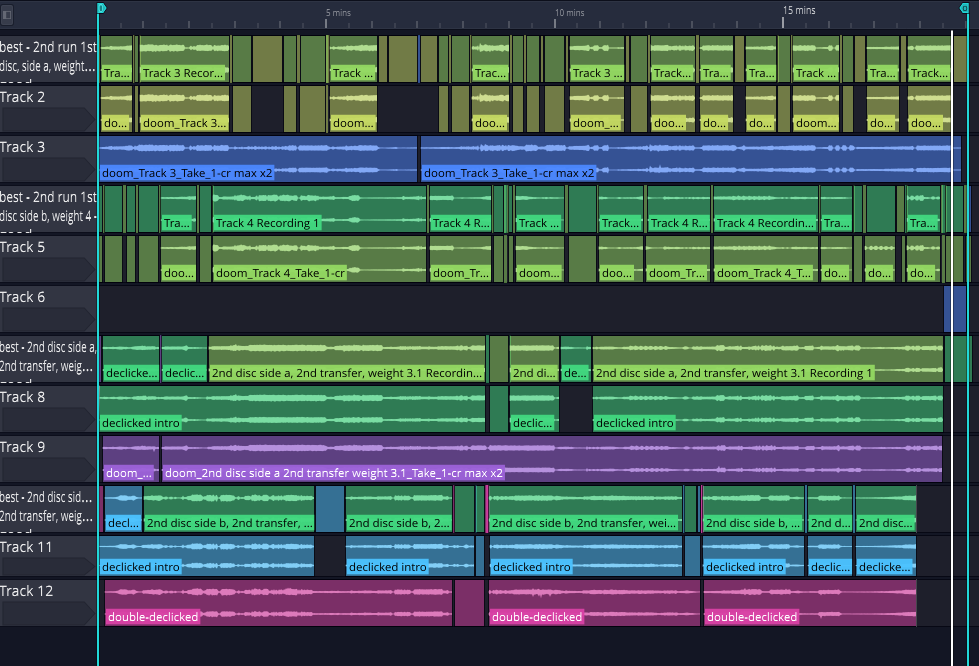
I'm in the process of comparing my vinyl rips to what is on the iTunes store in order to identify any discrepancies in track name, length, order (often vinyl track orders are different) that might in their totality keep a match from being made, but so far what I have are just a few clues to the mystery. There are a select few albums that have made it through 100% (Nautilus Superdisks), something that's not true even for some CDs. Some records won't make it at all, but if they do, generally, 40%-60% of the tracks make it. I know, because I've ripped quite a few myself and while not all songs end up matching, many of them do. It may take some time to ferret out just how iTunes match works (or in some cases, doesn't) but I can assure you that at least in some instances, it DOES match vinyl rips.
 0 kommentar(er)
